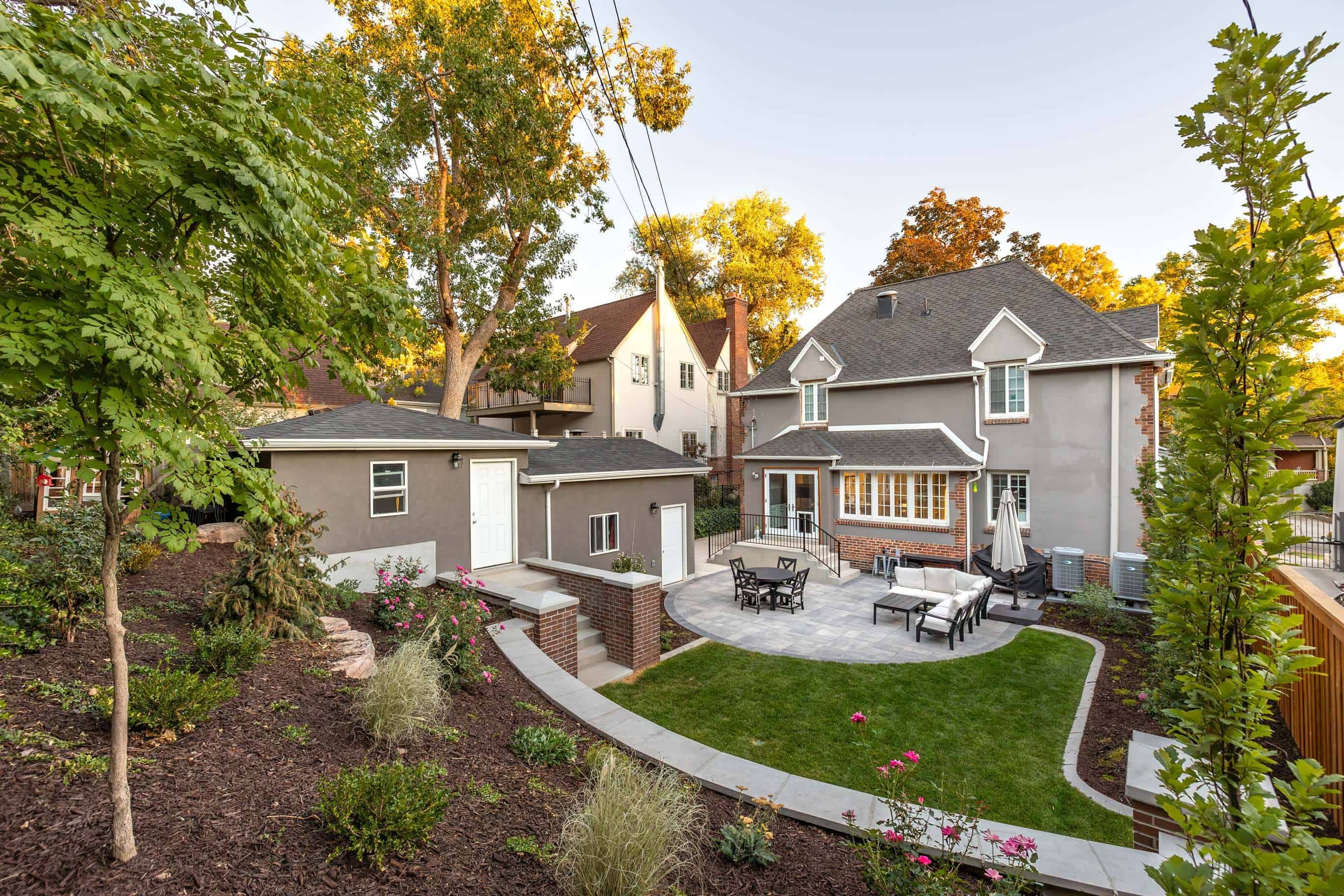
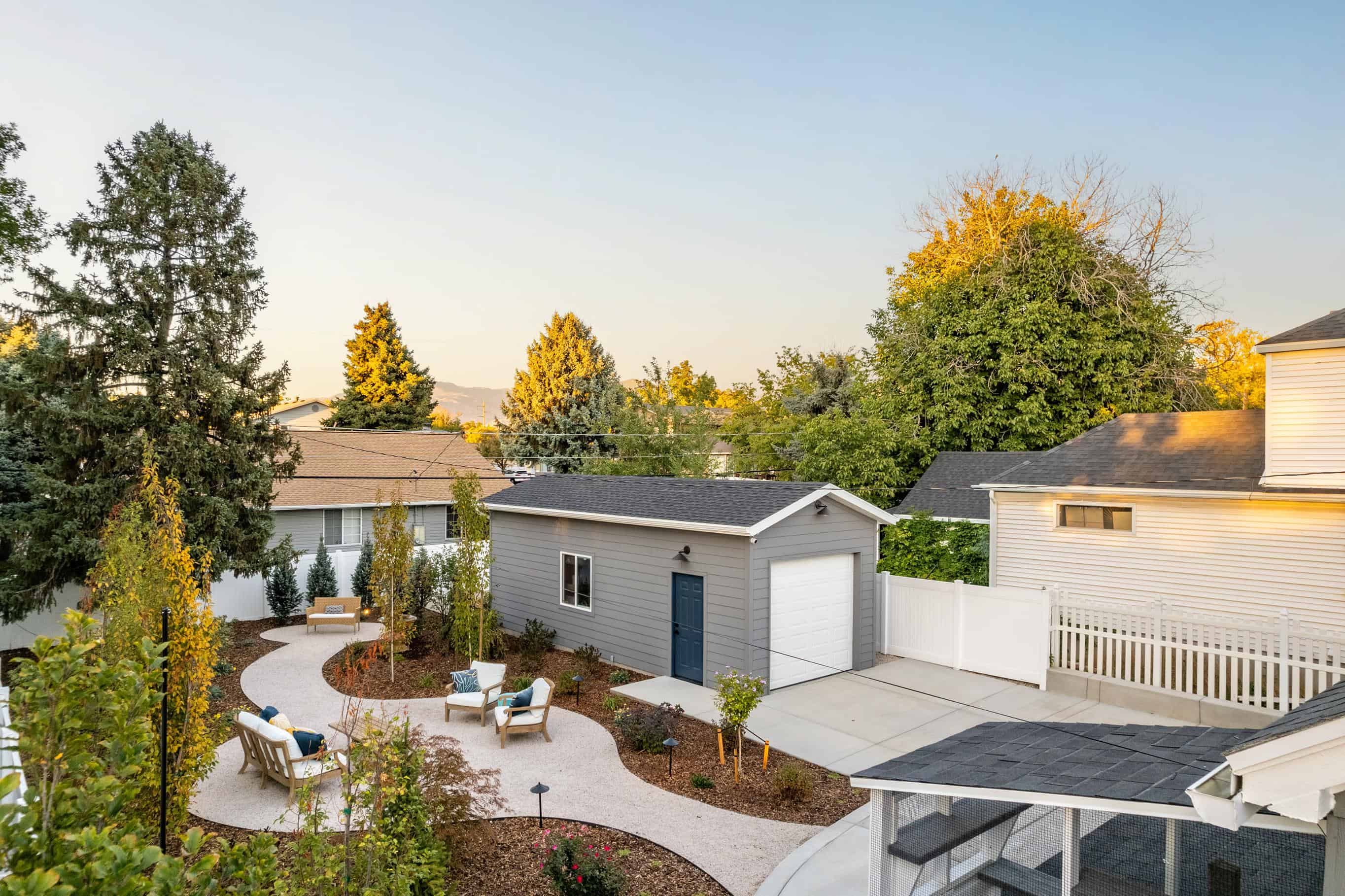
Salt Lake County — Utah's Most Diverse Landscape Market
Explore tailored Landscape Design expertise for homes and businesses in Salt Lake County.
Concrete Contractors in Salt Lake County - Our Project Impact
Pitt Landscape has completed 122 concrete contractors projects in Salt Lake County, totaling $974K in sold work at an average project value of $8K, with crews active in Cottonwood Heights, Draper, Herriman, Holladay and 11 others throughout Salt Lake County. We've been delivering this work here since February 2021, and that kind of long-standing local presence gives people confidence that we're here to stay.
306
Total Estimates
$3.5M
Estimate Revenue
122
Projects Sold
$974K
Sold Revenue
$222K
Top 10 Full-Scope Project Avg
Our largest installs combine landscape design ($152K) and construction ($69K) per project
$152K
Design
$69K
Construction
Project Coverage in Salt Lake County
Track where we're building concrete contractors projects throughout Salt Lake County.
City Summary
| City | Sold Jobs | Sold Revenue | Avg. Ticket |
|---|---|---|---|
| 44 | $439,198 | $9,982 | |
| 17 | $108,063 | $6,357 | |
| 11 | $104,018 | $9,456 | |
| 8 | $66,584 | $8,323 | |
| 7 | $51,867 | $7,410 | |
| Grand Total | 122 | $974,013 | $7,984 |
- Sold Revenue
- $439,198
- Avg. Ticket
- $9,982
- Sold Revenue
- $108,063
- Avg. Ticket
- $6,357
- Sold Revenue
- $104,018
- Avg. Ticket
- $9,456
- Sold Revenue
- $974,013
- Avg. Ticket
- $7,984
Concrete Contractors in Salt Lake County
Full-service concrete design and installation across the Salt Lake Valley — patios, driveways, walkways, and decorative finishes. One crew, one contract. Our crews tailor each project to local site conditions, property goals, and the long-term performance expectations for Salt Lake County.
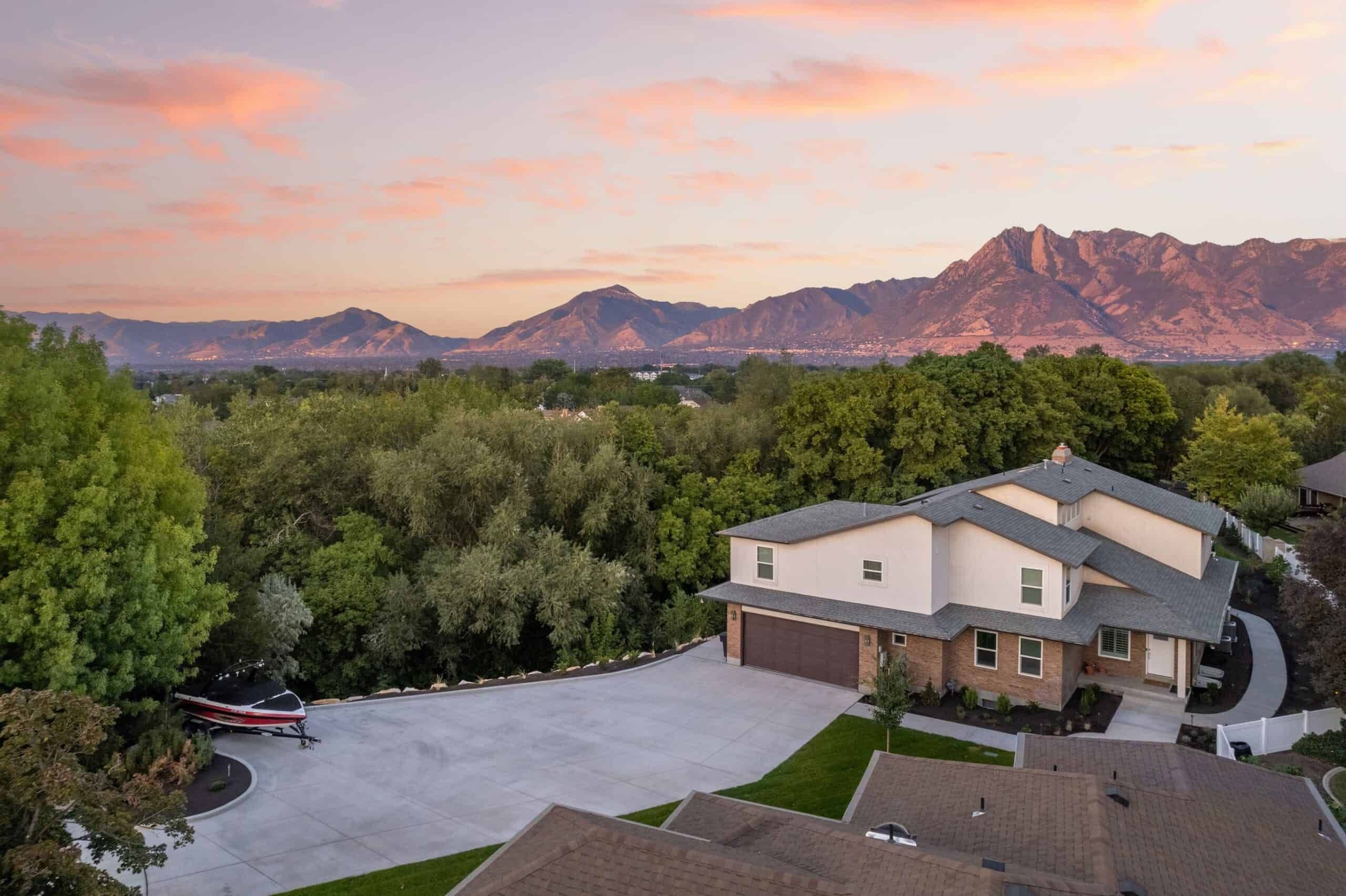
Customer Reviews in Salt Lake County
*edit* The issue with the supplier was fixed. However we did have a lot of communications issues between contractor, us, and those actually doing the work. End result was fine but a lot of hiccups
Pitt was absolutely amazing. They took the design and brought it to life, with a very difficult back yard project that required a lot of changes. They kept to cost (even came down in a couple of places) and were remarkably fast. My back yard is now a…
Pitt Landscape planted a forest in our front yard and gravel driveway addition in the Fall, and then demolished concrete and laid a new lawn in our backyard with stone stairs and a new path in the Spring. They did an amazing job, were always friendl…
Working with Pitt was a great experience. They were quick to respond to every question, worked efficiently without cutting corners, and delivered quality work. After dealing with an unprofessional contractor on the first half of our project, Pitt com…
Ryan and the team at Pitt Landscape did a fantatstic job on my cement project! Very professional! Fast! Excellent clean up! Couldn't be happier!
Salt Lake County Landscape Conditions by Area
East Bench (Holladay, Millcreek, Cottonwood Heights): Clay-heavy soils, mature tree canopies, established landscapes that need renovation rather than starting from scratch. Irrigation systems are often 20–30 years old and underperforming. Retaining walls are common on the hillside lots transitioning from flat valley to canyon terrain.
South Valley (Sandy, Draper, South Jordan, Herriman, Riverton, Bluffdale): Mix of new construction and 1980s–2000s builds. Lot sizes are larger than the urban core. Outdoor living investment is high in this market — patios, outdoor kitchens, and fire features are among the most common project types. Newer construction often has compacted soil and minimal landscaping from the builder.
Urban Core (Salt Lake City, Murray, West Jordan): Smaller lots, more urban design constraints, strong demand for space-efficient outdoor design. Rooftop decks and elevated outdoor spaces are more common here than anywhere else in the county. Historic properties in Federal Heights and Avenues neighborhoods require sensitivity to neighborhood character.
Choosing Landscape Design in Salt Lake County
With this much variety under one county designation, the most important thing we do before any Landscape Design project in Salt Lake County is site assessment — understanding the specific soils, drainage, existing vegetation, HOA restrictions, and intended use of the space. A landscape design that works perfectly in Draper may be completely wrong for a Federal Heights hillside lot. We don't apply county-wide assumptions when the conditions are this varied. Every Salt Lake County project starts with an on-site evaluation, and the design follows from what the site actually needs.
Project Gallery Overview
Browse real project shots grouped by service. Each card shows a service—tap to explore that service in detail.


Concrete Built to Survive Utah's Freeze-Thaw Cycle
Concrete in Utah fails for one reason more than any other: the freeze-thaw cycle. Water infiltrates the surface, freezes, expands, and spalls the concrete from the inside out. A Salt Lake Valley concrete project that wasn't designed for this reality looks great for two winters and crumbles in the third.
We've poured concrete for over 417 projects across the Wasatch Front. Every pour starts with the right mix — air-entrained concrete that builds in microscopic air pockets to handle freeze-thaw expansion — combined with proper base depth, control joints at the right spacing, and curing practices matched to Utah's climate. These aren't upgrades. They're how we do it on every project.
We handle the full scope: site measurement and design, excavation and base prep, form work, pour, finish, and sealing. One crew, one contract, no subcontractor coordination on your end.
What We Build — Patios, Driveways, Walkways, and More
Our concrete work covers the full range of residential exterior applications:
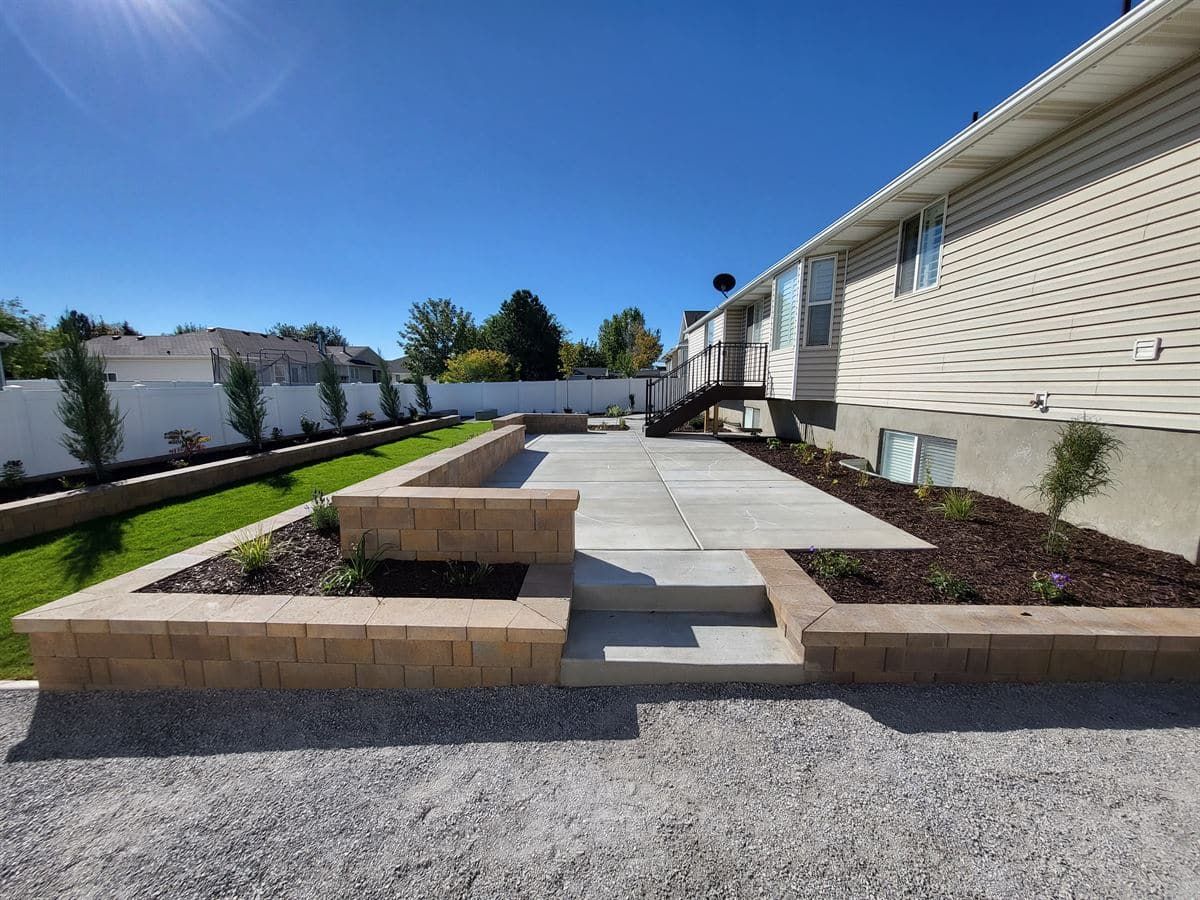
- Patio slabs — The most common request. We size the slab to the space, slope it properly for drainage, and finish it to your specification — broom finish, exposed aggregate, stamped, or smooth trowel.
- Driveways — Driveways require deeper base depth (10–12 inches) and a thicker slab (5–6 inches) than patios. We also include expansion joints at the garage apron and any point where the driveway meets another surface.
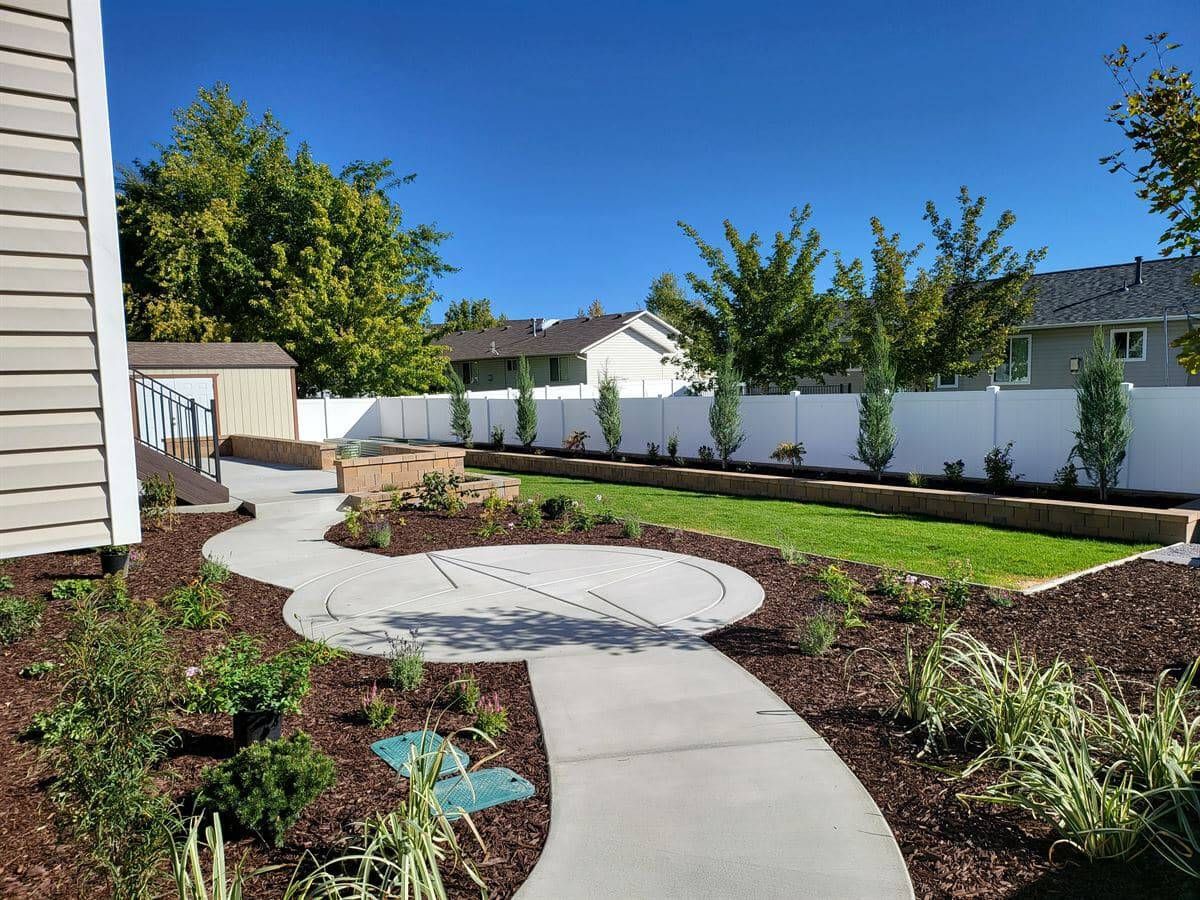
- Walkways and sidewalks — Entry walks, side-yard paths, and property-line sidewalks. We match slope to existing grades and include control joints every 4–5 feet to prevent random cracking.
- Steps and landings — Concrete steps at entries, retaining wall transitions, and grade changes. Formed in-place or with precast treads depending on the application.
- Pool decks — Broom-finish or exposed aggregate for slip resistance. Properly sloped away from the pool and sealed for chlorine resistance.
- Retaining wall caps — Poured concrete caps on CMU or block retaining walls for a finished, durable top surface.
- Garage aprons and approach slabs — The transition between driveway and garage door is a high-traffic, high-stress joint. We form this correctly to prevent heaving at the garage threshold.
Exposed Aggregate, Stamped, and Decorative Concrete Options
Standard broom finish is durable and clean — but if you want more, we offer decorative finishes that add character without sacrificing longevity:
Exposed aggregate is our most recommended decorative option for the Salt Lake Valley. The surface is seeded with decorative stone — river rock, granite chips, or colored aggregate — then the paste is washed away to expose the stone. The result is a textured, slip-resistant surface with natural character. It holds up better than stamped concrete in freeze-thaw conditions because there's no surface layer to spall or delaminate.
Stamped concrete mimics the look of stone, brick, or wood using textured forms pressed into fresh concrete. It's paired with integral color or acid stain for realistic effect. Stamped concrete looks excellent but requires periodic resealing (every 2–4 years in Utah) to protect the color layer and surface finish. We recommend it on covered patios or areas with less weather exposure.
Integral color adds pigment throughout the mix — not just on the surface — so scratches and chips don't expose gray concrete underneath. Works with broom, trowel, or exposed aggregate finishes.
Broom finish remains the right choice for most driveways, walkways, and utility pads. Reliable slip resistance, minimal maintenance, and the most economical decorative option.
Why Concrete Fails — and What We Do Differently
Most concrete failures in Utah trace back to one of three causes, all of which are preventable:
Inadequate base depth. Concrete laid on poorly compacted or shallow base material settles unevenly and cracks. Our standard base depth is 6–8 inches for patios and walkways, 10–12 inches for driveways. All base material is compacted in lifts with a plate compactor, not just dumped and screeded.
Missing or misplaced control joints. Concrete shrinks as it cures. Without control joints at regular intervals, that shrinkage produces random cracks in the middle of the slab. We cut or tool control joints every 10 feet (or less on wider slabs) to direct cracking to the joint where it's invisible and harmless.
Wrong concrete mix for the climate. Air-entrained concrete — specified to 5–7% air content — is standard practice in Utah. The air voids absorb freeze-thaw expansion that would otherwise spall a dense mix. We specify this mix on every residential pour, not as an upcharge.
We also seal every concrete surface at completion with a penetrating silane-siloxane sealer. It reduces water infiltration and extends the life of decorative finishes.
Our Concrete Process — Consultation to Completion
- Free on-site estimate — We measure the area, assess existing grades and drainage, review finish options, and check for underground utilities before quoting.
- Design and proposal — Written proposal covering dimensions, base depth, finish specification, control joint layout, and total cost. Fixed price — no change orders for normal site conditions.
- Excavation and base prep — We excavate to required depth, haul off material, bring in road base, and compact in lifts. This phase determines the long-term performance of the finished slab.
- Form work — Steel or wood forms set to grade and slope. Slope is critical — water should drain away from structures at a minimum 1/8 inch per foot.
- Pour and finish — Concrete ordered to our spec (air-entrained, correct PSI for application). Poured, screeded, and finished to the agreed surface texture. Control joints cut within 24 hours of pour.
- Curing and sealing — Curing compound or wet cure for the first 7 days. Penetrating sealer applied at 28 days after the concrete has reached design strength.
Most residential concrete projects run 1–3 days on-site. Larger driveways or multi-phase projects may run 5–7 days. We'll give you a specific schedule with your proposal.
Concrete Cost in the Salt Lake Valley
Concrete pricing in Utah varies by finish type, base depth requirement, and project complexity:
- Broom finish patio (standard base): $10–$16 per square foot installed
- Exposed aggregate patio: $14–$20 per square foot
- Stamped concrete (single color): $16–$24 per square foot
- Stamped concrete (multiple colors or complex pattern): $22–$35 per square foot
- Standard driveway replacement: $12–$18 per square foot (heavier base included)
A typical 300 sq ft broom-finish patio runs $3,500–$5,500 installed. A full driveway replacement (600–900 sq ft) typically runs $8,000–$18,000 depending on size and grade complexity. We'll give you an exact price after the free on-site estimate — every site is different enough that square-foot ranges can mislead.
Ready to Start Your Concrete Contractors Project?
tell us more about your concrete contractors project — we'll connect you with a local specialist.