
Serving Utah since 2007. A Utah B-100 licensed general contractor, with a free consultation and line-item pricing.
Pavers Installation in Davis County - Our Project Impact
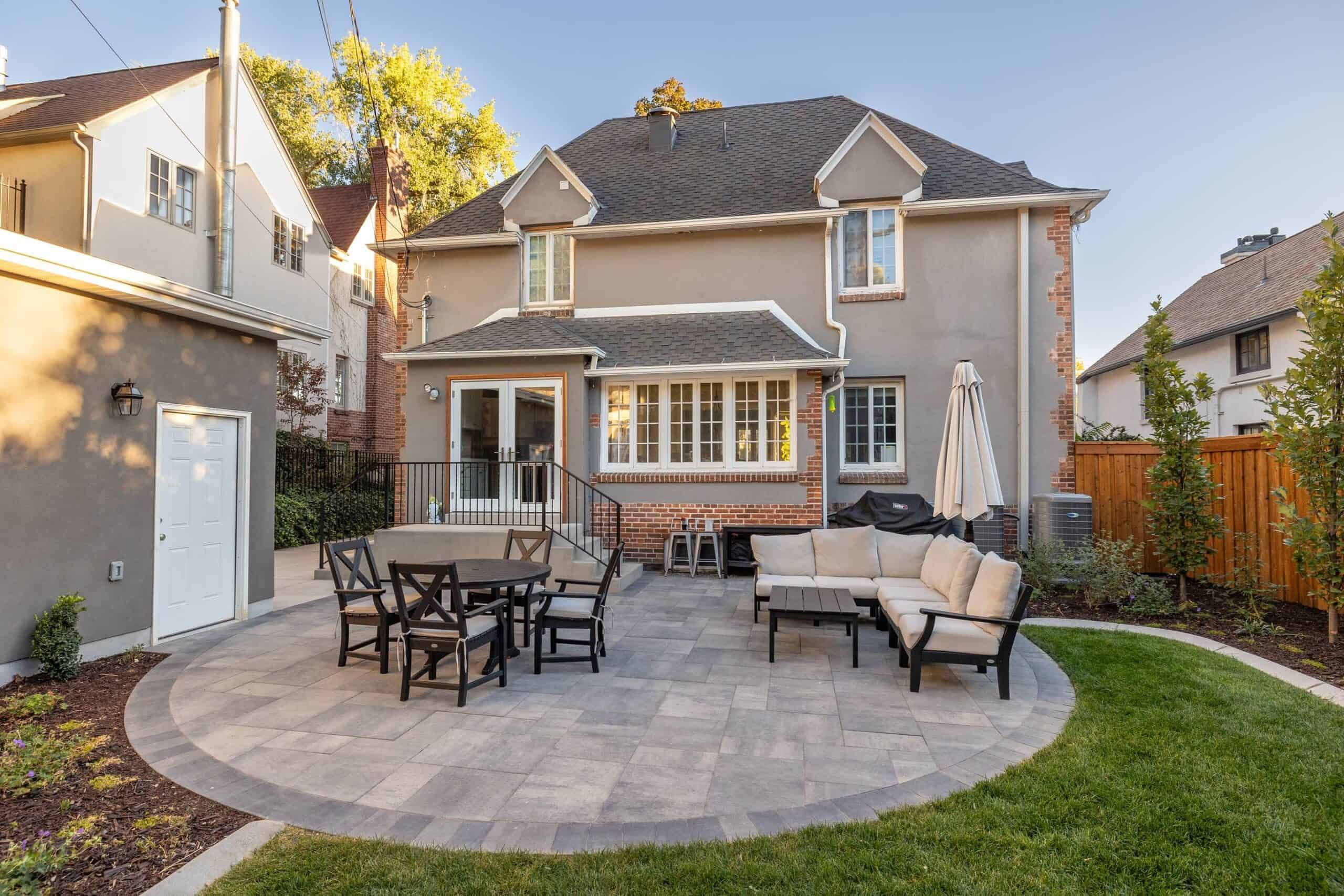
Serving Utah since 2007, Pitt Landscape has been hired for this work in Davis County, including jobs in Bountiful, Farmington, Fruit Heights, Layton and 1 other.
Project Coverage in Davis County
See where Pitt Landscape has estimated this work in Davis County.
About Pavers Installation
Paver patios, driveways, walkways and pool decks across Utah, from a Utah B-100 licensed general contractor, priced line by line.
Customer Reviews in Davis County
We had an excellent experience working with Pitt Landscape. From start to finish, their professionalism stood out. They did a great job creating and executing a landscape design that balanced their expertise with my ideas. They listened carefully, o…
What Davis County projects include
Retaining walls are on more than four in ten of our Davis County projects, a higher share than our company-wide figure. Most began with site preparation, about half added new sprinklers, and planting is on more than a third. About one in five had five or more services in a single estimate.
Project Gallery Overview
Browse real project shots grouped by service. Each card shows a service—tap to explore that service in detail.


Pavers Installation FAQs for Davis County
Common questions about Pavers Installation in Davis County.
How long do pavers last in Utah's climate?
Can you install pavers over an existing concrete patio?
Can you use a paver brand my HOA requires?
How long before I can drive or park on newly installed pavers?
Why does sand keep washing out of my paver joints?
Should I seal my pavers, and when?
Paver Installation for Utah Winters
Utah's freeze-thaw cycle is hard on any hard surface. Pavers handle it well: the joints let individual units shift slightly without cracking, and a damaged paver can be replaced without tearing out the whole surface.
We install paver patios, driveways, pool decks, walkways and wall caps across Utah. What makes pavers last is what you can't see: base depth, compaction and edge restraints.
If your HOA requires a particular paver, we can source it from that manufacturer, and we'll help you work through the HOA's materials list and choose a style and color that fits your home.
What's Included in a Paver Installation Project
- Site measurement and layout — We measure the space when the scope needs it, review grade and drainage, and help you choose pattern, color and border.
- Excavation — Deep enough for the base the use calls for: more for driveways, less for walkways. Excavated material is hauled away.
- Base installation — Road base compacted in thin lifts with a plate compactor. The base is the key to any paver job.
- Edge restraints — Aluminum or plastic edge restraint spiked into the base keeps the field from spreading. Needed on every open edge.
- Sand bedding layer — About an inch of coarse bedding sand, screeded level. Pavers are set into this layer.
- Paver installation — Hand-laid to pattern, cut to fit at borders, compacted into the sand bed with a plate compactor and rubber pad.
- Polymeric sand — Joint sand swept in and activated with water. Locks joints, resists weeds and ants, and stabilizes the surface.
- Sealer (optional) — A penetrating sealer protects against staining; a film-forming one also enhances color. Reapply about every three to five years.
Paver Cost in Utah
Paver installation cost in Utah depends on area, paver type, base depth, and project complexity. Your estimate prices each of these line by line:
- Paver patio (standard concrete pavers, 200–400 sq ft)
- Paver driveway (standard, 400–800 sq ft) — deeper base required
- Paver walkway
- Premium pavers (large format or tumbled) — an added cost over standard pavers
From our records: the middle half of 89 paver projects ran about $21,000 to $64,000 (2021–2026). These are whole-project totals, so they include any other work built alongside the pavers.
Your free consultation gives you a full line-item estimate, and we visit and measure when the scope needs it.
Paver Types and Materials: How to Choose
The paver market offers more options than most homeowners expect — and the right choice depends on application, budget, and design goals.
Concrete pavers are a common choice in Utah. They are made to tight tolerances, come in many colors and textures, and hold up well to Utah's sun and freeze-thaw cycles. Large-format concrete pavers give a more modern look.
Travertine stays cooler underfoot than concrete in direct sun — a meaningful advantage around pools. It requires sealing in Utah's climate to prevent mineral deposits and freeze-thaw damage to the naturally porous surface.
Porcelain pavers need little maintenance: no sealing, very little staining, and a consistent finish. They require a more precise installation (tighter tolerances than concrete pavers) and a higher material budget, but hold their appearance well over time.
Natural flagstone (sandstone, slate, quartzite) gives each project a handmade character. No two pieces are identical. Base preparation is equally important — natural stone is not more forgiving of a poor base than concrete pavers.
Paver Patterns and Design: What the Layout Does to the Space
Pattern choice affects how a space feels as much as what material you use. A few patterns and where they work:
Running bond (bricks offset like a standard wall) is a common pattern and works well almost anywhere. Clean, modern, directional — the direction of the joint lines can make a narrow space feel wider or a short space feel longer.
Herringbone is the pattern usually recommended for driveways. The 45° or 90° interlocking layout spreads vehicle loads across more joint lines, so it resists shifting under tires. For a paver driveway, it is the pattern we recommend.
Basketweave has a classic, traditional look. It reads well in wider spaces — in a narrow walkway it can feel busy.
Soldier course border is not a full pattern — it is a single row of pavers laid perpendicular to the main field, used as an edge treatment. It defines the boundary of the paved area and gives the edge a finished look. We recommend one on most patios and driveways.
Pavers as Part of a Complete Hardscape System in Davis County
Paver patios, driveways and walkways rarely stand alone. Most of our paver projects also include other work, such as planting, retaining walls or concrete. Planned and built together in one estimate, the grade, drainage and look line up from the start instead of being fitted around each other later.
As a Utah B-100 licensed general contractor, we take on the excavation, base, pavers, walls and planting as one project. Start with a free consultation for your Davis County paver project.
Ready to Start Your Pavers Installation Project?
Tell us more about your pavers installation project.