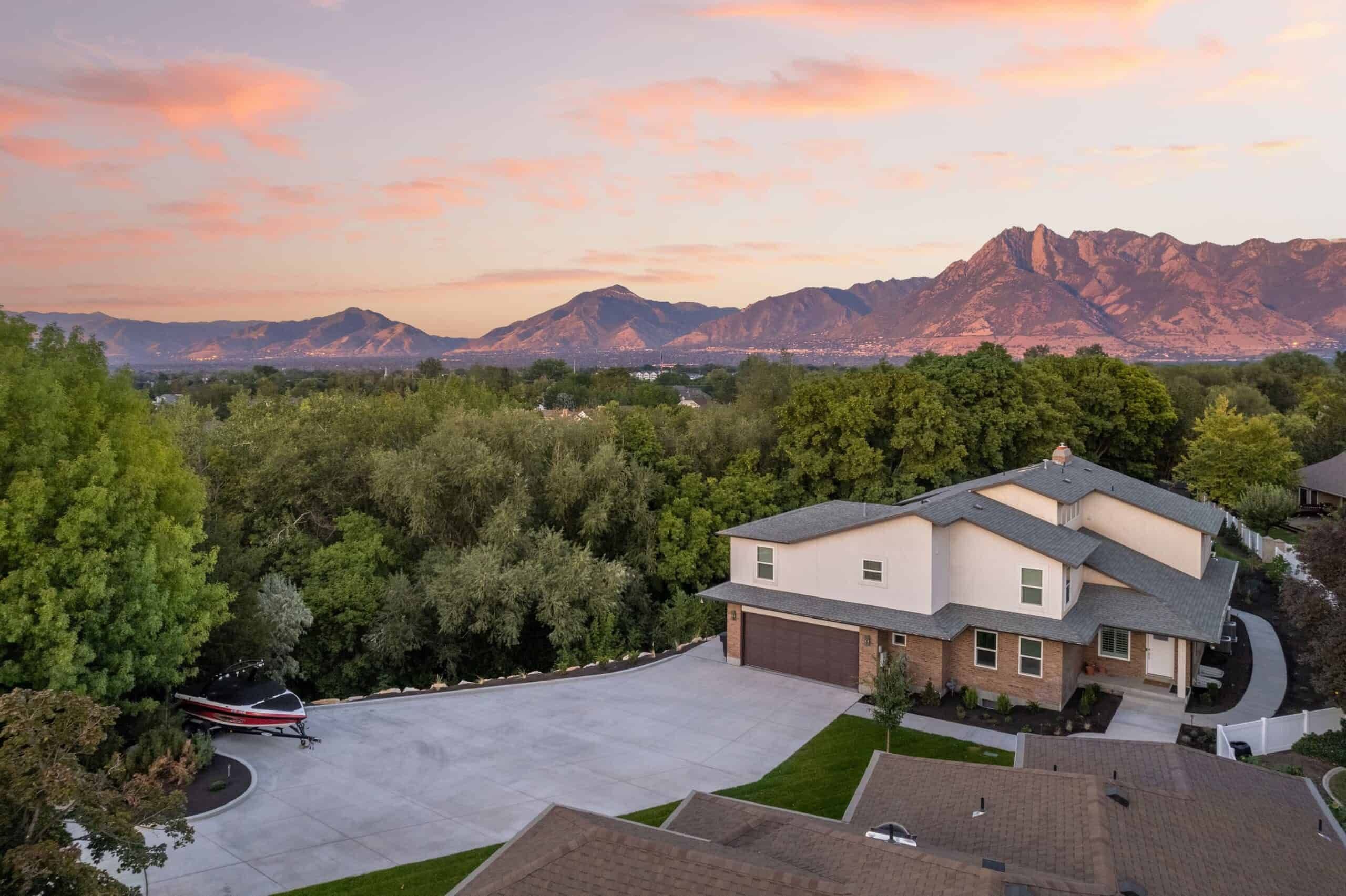
Salt Lake County — Utah's Most Diverse Landscape Market
Explore tailored Landscape Design expertise for homes and businesses in Salt Lake County.
Water Features in Salt Lake County - Our Project Impact
Pitt Landscape has completed 7 water features projects in Salt Lake County, totaling $23K in sold work at an average project value of $3K, with crews active in Cottonwood Heights, Murray, Salt Lake City, Sandy and 1 other throughout Salt Lake County. We've been delivering this work here since February 2021, and that kind of long-standing local presence gives people confidence that we're here to stay.
8
Total Estimates
$28K
Estimate Revenue
7
Projects Sold
$23K
Sold Revenue
$82K
Top 7 Full-Scope Project Avg
Our largest installs combine landscape design ($50K) and construction ($32K) per project
$50K
Design
$32K
Construction
Project Coverage in Salt Lake County
Track where we're building water features projects throughout Salt Lake County.
City Summary
| City | Sold Jobs | Sold Revenue | Avg. Ticket |
|---|---|---|---|
| 1 | $7,333 | $7,333 | |
| 2 | $6,777 | $3,388 | |
| 2 | $5,806 | $2,903 | |
| 1 | $2,903 | $2,903 | |
| 1 | $0 | - | |
| Grand Total | 7 | $22,820 | $3,260 |
- Sold Revenue
- $7,333
- Avg. Ticket
- $7,333
- Sold Revenue
- $6,777
- Avg. Ticket
- $3,388
- Sold Revenue
- $5,806
- Avg. Ticket
- $2,903
- Sold Revenue
- $22,820
- Avg. Ticket
- $3,260
Water Features in Salt Lake County
Custom water feature design and installation across the Salt Lake Valley — pondless waterfalls, koi ponds, streams, and decorative fountains. One crew, one contract. Our crews tailor each project to local site conditions, property goals, and the long-term performance expectations for Salt Lake County.
Customer Reviews in Salt Lake County
Pitt did a great job changing our back yard from dead grass and roses to a modern water wise layout. They communicated well and we're pleased with the work. However, the planting has been a huge disappointment. A good 20% of the plants didn't make it…
We have been getting estimates for our landscape project and were impressed with the quick and clear communication from the Pitt Landscape Crew!
Salt Lake County Landscape Conditions by Area
East Bench (Holladay, Millcreek, Cottonwood Heights): Clay-heavy soils, mature tree canopies, established landscapes that need renovation rather than starting from scratch. Irrigation systems are often 20–30 years old and underperforming. Retaining walls are common on the hillside lots transitioning from flat valley to canyon terrain.
South Valley (Sandy, Draper, South Jordan, Herriman, Riverton, Bluffdale): Mix of new construction and 1980s–2000s builds. Lot sizes are larger than the urban core. Outdoor living investment is high in this market — patios, outdoor kitchens, and fire features are among the most common project types. Newer construction often has compacted soil and minimal landscaping from the builder.
Urban Core (Salt Lake City, Murray, West Jordan): Smaller lots, more urban design constraints, strong demand for space-efficient outdoor design. Rooftop decks and elevated outdoor spaces are more common here than anywhere else in the county. Historic properties in Federal Heights and Avenues neighborhoods require sensitivity to neighborhood character.
Choosing Landscape Design in Salt Lake County
With this much variety under one county designation, the most important thing we do before any Landscape Design project in Salt Lake County is site assessment — understanding the specific soils, drainage, existing vegetation, HOA restrictions, and intended use of the space. A landscape design that works perfectly in Draper may be completely wrong for a Federal Heights hillside lot. We don't apply county-wide assumptions when the conditions are this varied. Every Salt Lake County project starts with an on-site evaluation, and the design follows from what the site actually needs.
Project Gallery Overview
Browse real project shots grouped by service. Each card shows a service—tap to explore that service in detail.


Custom Water Features Built for Utah's Climate
A water feature changes how your yard feels. The sound of moving water masks traffic noise, creates a focal point that draws the eye, and makes outdoor time feel like a retreat rather than just a backyard. Done right, a water feature in the Salt Lake Valley runs nine months of the year, holds its value, and requires less maintenance than most homeowners expect.
The key word is "done right." Utah's freeze-thaw cycle, hard water, and high UV exposure punish water features that aren't designed for them. A liner that works in a mild climate fails under Utah frost pressure. Pumps that can't handle hard water mineral buildup fail by year three. We design around these realities on every project.
We've completed water feature projects across Draper, Sandy, South Jordan, Murray, Park City, and the broader Wasatch Front. Most of our water feature installs are part of a larger outdoor living scope — the feature is designed to integrate with the surrounding hardscape, plantings, and lighting rather than sitting in the yard as a standalone afterthought.
Types of Water Features We Build
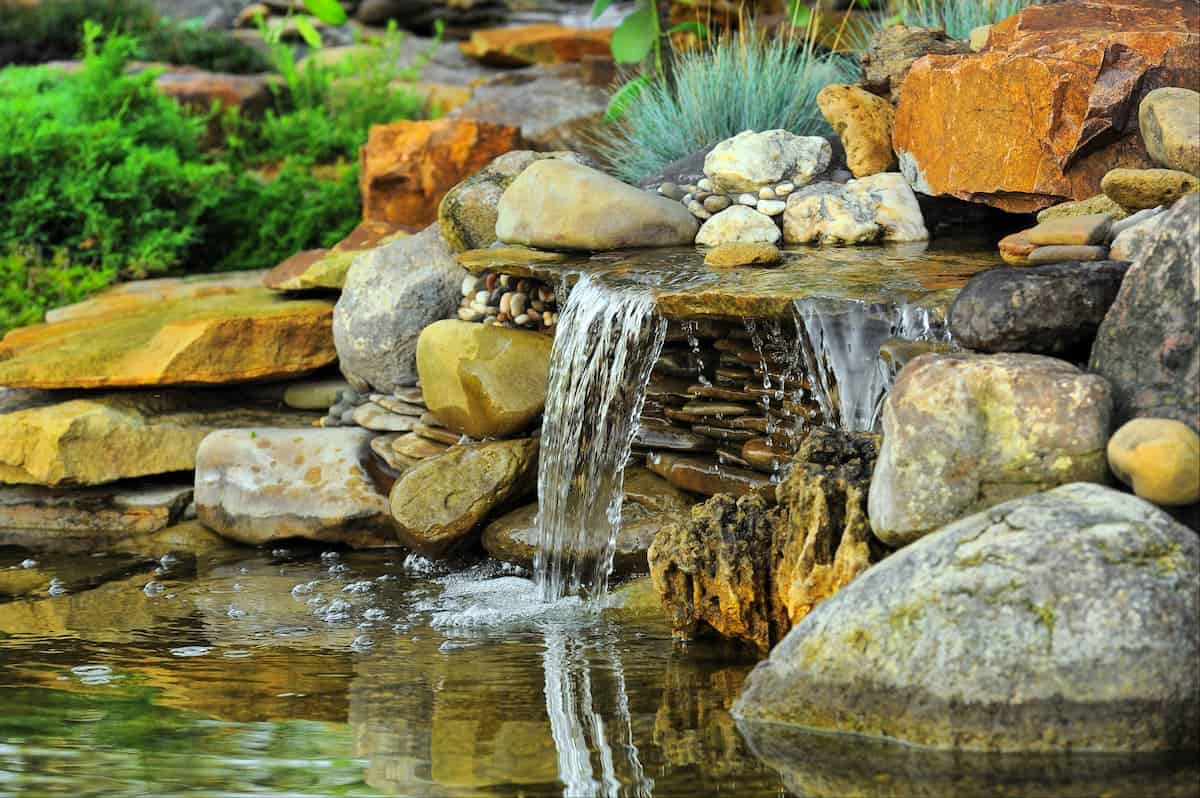
Pondless waterfalls are our most recommended water feature for the Salt Lake Valley. The waterfall is real — boulders, recirculating water, and the sound of falling water — but there's no pond. Water collects in an underground reservoir instead of an open pond, which means no algae management, no mosquitoes, and no drowning risk for small children. Pondless waterfalls are also winter-friendly: drain the reservoir in November, restart in April. We build most of ours with natural boulders sourced locally for a look that fits Utah's landscape character.
Koi ponds are a larger commitment — more maintenance, more engineering, and more cost — but for the right client, nothing compares. A properly built koi pond includes a bottom drain, bottom-to-top water flow, mechanical and biological filtration, and sufficient depth (3 feet minimum in Utah to allow koi to overwinter). We design koi ponds with maintenance in mind: accessible filters, easy drain points, and pump configurations that make the weekly routine manageable.
Streams and creek beds connect a waterfall or pond to the landscape. A naturalistic stream with boulders and gravel beds creates movement and sound across a larger area. We design streams with the correct grade to move water convincingly and hold it without seepage.
Spillway bowls and decorative fountains are lower-maintenance options for smaller spaces or courtyards. A stacked stone or precast spillway with recirculating water adds the sound and visual interest of a water feature without the footprint of a full waterfall or pond.
Winterizing Water Features in Utah
Water features in the Salt Lake Valley need to be properly shut down before the first hard freeze — typically late October to early November in most valley cities, earlier in Park City and Summit County.
Pondless waterfalls: Drain the reservoir, remove and store the pump, clean the basin of debris. Takes about an hour. We offer winterization as a recurring service.
Koi ponds: More involved. As temperatures drop, koi metabolism slows and they stop eating — feeding past 50°F fouls the water. A pond aerator keeps oxygen levels up under ice. The pump may continue running all winter on a properly depth-designed pond (3 feet+ in Utah), or be pulled and stored depending on your filtration setup. We design every koi pond with a winterization strategy in mind from the start.
Spring restart: Clean filters, reinstall pump, check plumbing connections, test the system before full operation. We're available for spring startup on all systems we install.
We design every water feature with winterization in mind — accessible drain points, removable pump configurations, and reservoir sizing that handles the thermal cycle. A water feature that's difficult to winterize gets neglected, and neglected water features fail.
Hard Water and Maintenance in Utah
Salt Lake Valley water is hard — high in calcium and magnesium. Over a season, hard water leaves mineral deposits on boulders, pump components, and any decorative stone surface where water evaporates. This is normal and manageable, but it requires the right maintenance approach.
We design for hard water management on every project:
- Pump selection — Pumps with corrosion-resistant impellers and easy-clean filter screens handle hard water better than cheaper alternatives. We spec pumps for Utah water chemistry, not generic recommendations.
- Reservoir capacity — Larger reservoirs reduce the water-to-mineral concentration ratio, slowing buildup. We size pondless reservoirs generously.
- Accessible filter media — Biological and mechanical filters need periodic cleaning. We build easy access into every filtration setup.
- Annual descaling — Mineral buildup on boulders and stone can be removed with diluted citric acid. We walk clients through this process and offer it as a maintenance service.
Realistic maintenance expectation: a pondless waterfall requires 2–3 hours of maintenance per season — pump cleaning in spring, debris clearing mid-season, and winterization in fall. A koi pond requires more: weekly skimming, filter cleaning every 2–4 weeks, and careful attention to water chemistry. We're honest about this during the estimate process so you select the right feature type for your lifestyle.
How Water Features Integrate With Your Landscape
A water feature that's designed separately from the rest of the landscape looks like it was added as an afterthought — because it was. The best water features are designed as part of the outdoor living space from the start: the boulder selection matches the retaining walls, the surrounding planting palette frames the waterfall without blocking the view from the patio, and the lighting system that covers the outdoor kitchen extends to illuminate the water at night.
We design water features as components of the full outdoor scope. That means:
- Boulder sourcing that matches the site — We use the same boulder types in water features as in nearby retaining walls so the hardscape reads as a unified system.
- Planting integration — Bog plants and moisture-tolerant species around the pond edges. Grass and groundcover to naturalize the stream edges. We plan the plantings as part of the water feature design.
- Lighting — Submersible LED lights in the basin or beneath the falls. Uplighting on surrounding boulders. All on the same low-voltage system as the rest of the yard.
- Grade integration — A waterfall that terminates at grade with the surrounding hardscape looks designed. One that sits on top of the lawn looks dropped in. We grade around every feature installation.
Water Feature Cost in the Salt Lake Valley
Water feature cost depends primarily on feature type, size, and the complexity of the surrounding integration:
- Small pondless waterfall (6–8 ft fall, simple basin): $5,000–$9,000
- Medium pondless waterfall with stream (10–15 ft, boulder-faced): $9,000–$18,000
- Large pondless waterfall or full stream feature: $18,000–$35,000+
- Koi pond (basic, 8×10, filtration system): $12,000–$22,000
- Koi pond (full design, 10×15+, bottom drain, biological filtration): $22,000–$45,000+
- Spillway bowl or decorative fountain: $3,000–$7,000
Our average water feature project runs approximately $12,000–$18,000 for a mid-size pondless waterfall integrated with surrounding hardscape. Projects that include a koi pond, extended stream, or significant planting and lighting scope will be higher. The most accurate number comes from a free on-site estimate — feature size, boulder sourcing, and grade complexity all affect cost in ways that a range can't capture.
Ready to Start Your Water Features Project?
tell us more about your water features project — we'll connect you with a local specialist.