



Water Features in Utah County
Serving Utah since 2007. A Utah B-100 licensed general contractor, with a free consultation and line-item pricing.
“I needed a landscape company that could do it all for me so that I only needed to interact with one place. I chose Pitt ”
Water Features in Utah County - Our Project Impact
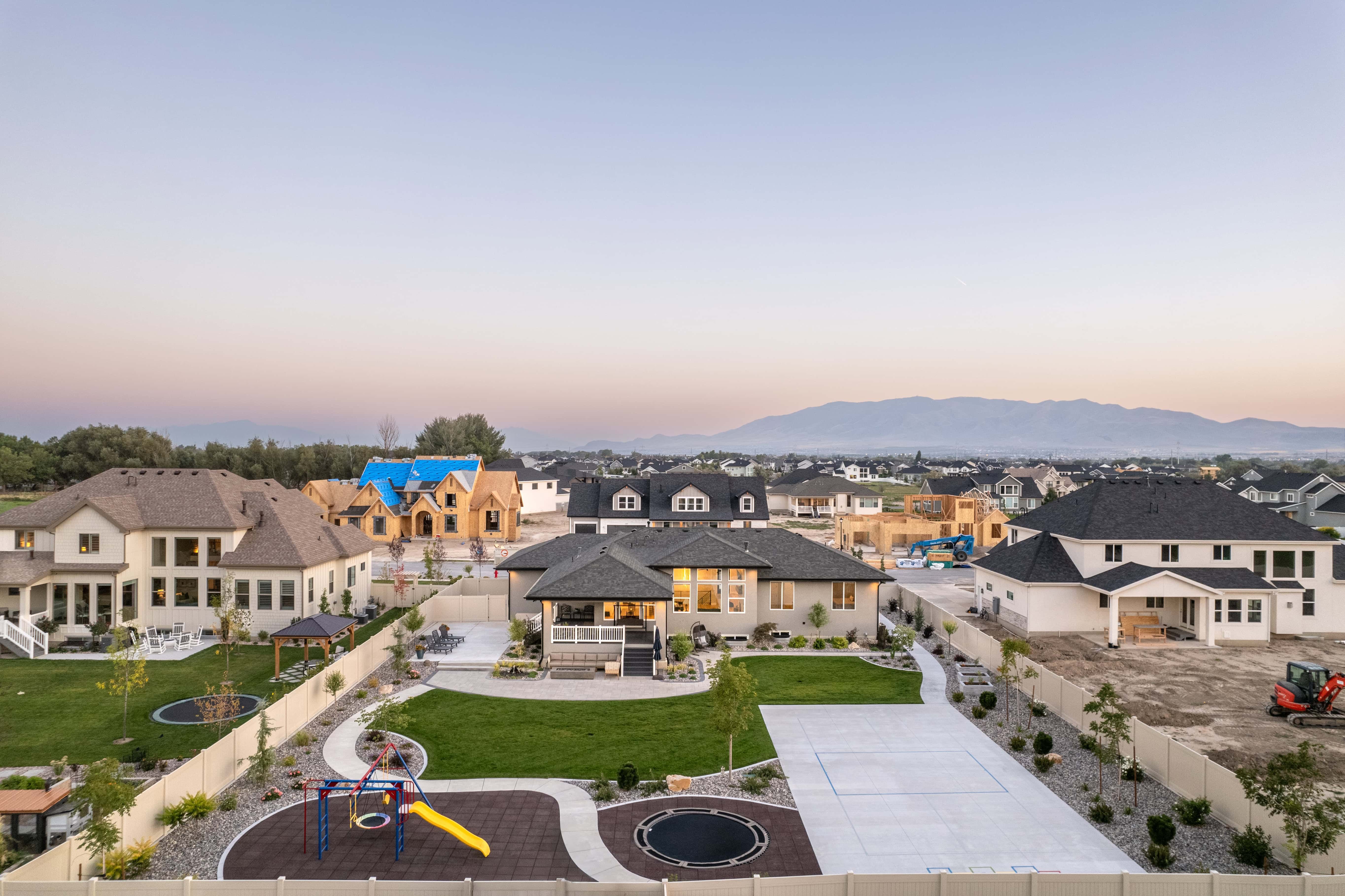
Serving Utah since 2007, Pitt Landscape has been hired for this work in Utah County.
About Water Features
Pondless waterfalls, koi ponds, streams and fountains for Utah yards, usually built with the hardscape around them and priced line by line.
Customer Reviews in Utah County
I needed a landscape company that could do it all for me so that I only needed to interact with one place. I chose Pitt Landscape to install my yard in Lehi and it was such a great decision. From my first contact with Bryan Capilli to my main contac…
What Utah County projects include
Concrete is on more than half of our Utah County projects, a higher share than our company-wide figure, and about three in ten had design priced in the same estimate. Most began with site preparation, more than half included new sprinklers, and planting and retaining walls each appear on about a third. More than a third brought five or more services together in one estimate.
Project Gallery Overview
Browse real project shots grouped by service. Each card shows a service—tap to explore that service in detail.

Water Features FAQs for Utah County
Common questions about Water Features in Utah County.
What type of water feature is right for a Utah yard?
How do you winterize a water feature in Utah?
How much maintenance does a water feature require?
Can you add a water feature to an existing landscape?
Do you install koi ponds in Utah?
Custom Water Features for Utah's Climate
A water feature changes how your yard feels. The sound of moving water masks traffic noise, creates a focal point that draws the eye, and makes outdoor time feel like a retreat rather than just a backyard. Built well, a water feature in Utah runs from spring through fall, and a pondless waterfall needs only a few hours of upkeep a season.
Utah's freeze-thaw cycle, hard water and strong sun are tough on water features. Frost puts pressure on liners, and hard-water minerals build up on pumps, so the liner, pump and layout should be chosen with both in mind.
Our water features are usually built as part of a larger project, tied into the surrounding hardscape rather than set in the yard as an afterthought.
Types of Water Features We Build
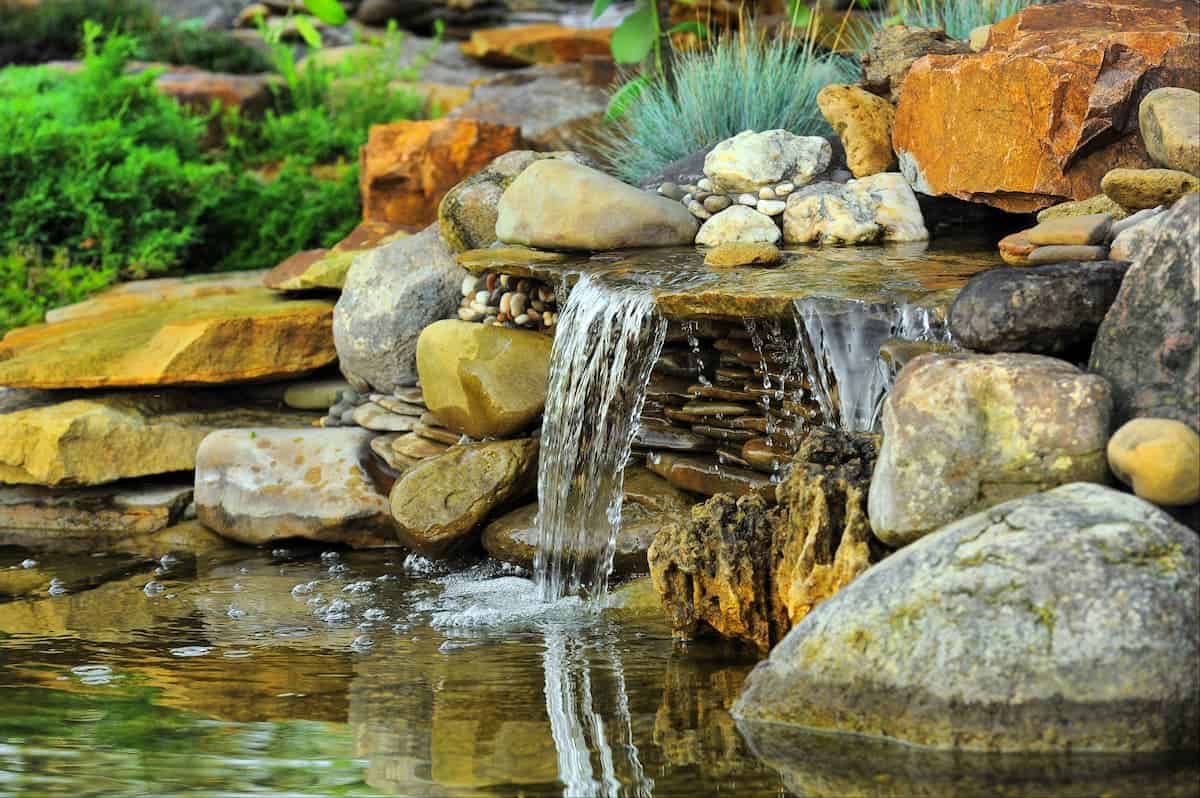
Pondless waterfalls are the better fit for most Utah yards. The waterfall is real — boulders, recirculating water, and the sound of falling water — but there's no pond. Water collects in an underground reservoir instead of an open pond, which means less algae to manage, no standing water for mosquitoes, and no open pond for small children to fall into. They are also easier to winterize: drain the reservoir in fall and restart in spring. Natural boulders give them a look that fits Utah landscapes.
Koi ponds are a larger commitment — more maintenance, more construction, and more cost — and they suit homeowners who want a living ecosystem. A well-built koi pond includes a bottom drain, bottom-to-top water flow, mechanical and biological filtration, and enough depth (at least 3 feet in Utah so koi can overwinter). It should be laid out with maintenance in mind: accessible filters, easy drain points, and a pump setup that keeps the weekly routine manageable.
Streams and creek beds connect a waterfall or pond to the landscape. A naturalistic stream with boulders and gravel beds creates movement and sound across a larger area. A stream needs the right grade to move water convincingly and a liner that holds it without seepage.
Spillway bowls and decorative fountains are lower-maintenance options for smaller spaces or courtyards. A stacked stone or precast spillway with recirculating water adds the sound and visual interest of a water feature without the footprint of a full waterfall or pond.
Winterizing Water Features in Utah
Water features in Utah need winter prep before the first hard freeze, typically late October to early November in the valleys and earlier at higher elevations.
Pondless waterfalls: Drain the reservoir, remove and store the pump, clean the basin of debris. Takes about an hour.
Koi ponds: More involved. As temperatures drop, koi metabolism slows and they stop eating, and feeding them once the water is below about 50°F fouls the water. An aerator or de-icer keeps a hole open in the ice. On a pond at least 3 feet deep the pump may keep running all winter, or it can be pulled and stored, depending on the filtration setup.
Spring restart: Clean filters, reinstall pump, check plumbing connections, test the system before full operation.
Planning for winter when the feature is laid out, with accessible drain points and a pump that's easy to remove, keeps the fall routine simple. A water feature that's hard to winterize gets neglected, and neglected water features fail.
Hard Water and Maintenance in Utah
Much of Utah's water is hard — high in calcium and magnesium. Over a season, hard water leaves mineral deposits on boulders, pump components, and any decorative stone surface where water evaporates. This is normal and manageable, but it requires the right maintenance approach.
A few choices make hard water easier to manage:
- Pump selection — Pumps with corrosion-resistant impellers and easy-clean filter screens handle hard water better than cheaper alternatives.
- Reservoir capacity — Larger reservoirs reduce the water-to-mineral concentration ratio, slowing buildup.
- Accessible filter media — Biological and mechanical filters need periodic cleaning, and easy access to them makes that routine quicker.
- Annual descaling — Mineral buildup on boulders and stone can be removed with diluted citric acid.
Realistic maintenance expectation: a pondless waterfall requires 2–3 hours of maintenance per season — pump cleaning in spring, debris clearing mid-season, and winterization in fall. A koi pond requires more: weekly skimming, filter cleaning every 2–4 weeks, and careful attention to water chemistry. We'll go over these expectations during your free consultation so you can choose the feature that fits the time you have.
How Water Features Integrate With Your Landscape
A water feature that's designed separately from the rest of the landscape looks like it was added as an afterthought — because it was. Good water features are planned as part of the outdoor living space from the start: the boulders match the retaining walls, the planting frames the waterfall without blocking the view from the patio, and the yard's lighting extends to the water at night.
Planned with the rest of the yard, that means:
- Boulder sourcing that matches the site — The same boulder types as nearby retaining walls, so the hardscape reads as one system.
- Planting integration — Bog plants and moisture-tolerant species around the pond edges. Grass and groundcover to naturalize the stream edges, planned along with the water feature.
- Lighting — Submersible LED lights in the basin or beneath the falls. Uplighting on surrounding boulders. All on the same low-voltage system as the rest of the yard.
- Grade integration — A waterfall that terminates at grade with the surrounding hardscape looks designed. One that sits on top of the lawn looks dropped in. Grading around the feature ties it in.
Water Feature Cost in Utah
Water feature cost depends primarily on feature type, size, and the complexity of the surrounding integration:
- Small pondless waterfall (6–8 ft fall, simple basin)
- Medium pondless waterfall with stream (10–15 ft, boulder-faced)
- Large pondless waterfall or full stream feature
- Koi pond (basic, 8×10, filtration system)
- Koi pond (larger, 10×15+, bottom drain, biological filtration)
- Spillway bowl or decorative fountain
From our records: the middle half of 10 water feature projects ran about $31,000 to $114,000 (2021–2025). These are whole-project totals, so they include any other work built alongside the water feature.
Projects that include a koi pond, extended stream, or significant planting and lighting scope cost more. Your number comes from a free consultation, which is a full line-item estimate: feature size, boulder sourcing and grade all affect cost.
Ready to Start Your Water Features Project?
Tell us more about your water features project.